Reads input data all at once instead of piece by piece.
Uses the attention mechanism to find which parts of the input matter most
A Transformer model that has been trained on a very large set of text is called a Large Language Model or an LLM.
Model Mechanism
Tokenisation
Raw text is broken into small pieces also called tokens.
a token can be a whole word or a part of a word or even a punctuation mark
list of all possible tokens is the model’s vocabulary
Context Window
the amount of text in tokens that the model can remember at one time
it works like a sliding window
compute requirements: they scale quadratically with the length of a sequence.
increasing context length can slow down outputs, as it computes the relationships between the next token and every single preceding token in the sequence
Generation Controls
Temperature
changes how random or predictable the output is
value usually goes from zero to one
low temperature
Picks the most likely next word almost every time.
Steady but boring.
High temperature.
explores less likely word choices
Creative but mistake-prone
A high temperature makes outputs less determined by training data.
Top-p
Model lists many words and sorts them by probability
finds the smallest group of top words whose combined chance adds up to p
picks one word at random, weighed by their original chances
Frequency Penalty
controls the repetition of words or phrases
value determines how strongly to avoid repeats
Presence Penalty
discourages the model from repeating ideas or words that have already been introduced
differs from frequency penalty
frequency penalty: focuses on the repetition of words themselves (on the lexical side)
Presence Penalty: Focuses on concepts and ideas
Stopping Criteria
tells the model when to stop writing more text
criteria
token count
Special stop sequences (JSON code blocks prompts with delimiters)
semantic stopping (completes a paragraph, finishes a function, etc )
Function Calling and Tool Use
Sampling based criteria
Max length
maximum number of tokens a language model can generate in one reply
Model Families
Open Weight Models
Weights = trained parameters
open Weight Models: Weights Are Shared With Everyone
Closed-Weight Models
weights are not shared with the public
AI Agents Basics
Streamed vs Unstreamed Responses
streamed response - agent starts sending words as soon as it generates them.
feels fast
user can stop or change the request early
complex
unstreamed response - waits until the whole answer is ready
simpler to implement
easier to cache or log
user has to wait
key technologies enabling streaming
Server Sent Events or SSE
push updates to client in real time over a single HTTP connection
each chunk of data is a separate event
WebSockets
bi-directional communication channel
Asynchronous programming
Processes multiple client requests concurrently
Reasoning vs Standard Models
Standard models depend on patterns learned during training - often guess the next most likely word.
give an answer in one quick move
Reasoning models break a task into clear steps and follow a line of logic
better to solve math problems, plan actions, and spot errors
takes more time and compute power
Fine tuning vs Prompt Engineering
fine tuning
training an existing model further with your own data to adapt to specific tasks
extra data, extra compute power, extra time
Prompt Engineering
crafting better instructions or examples in the prompt itself
faster, cheaper, and safer
Embeddings and Vector Search
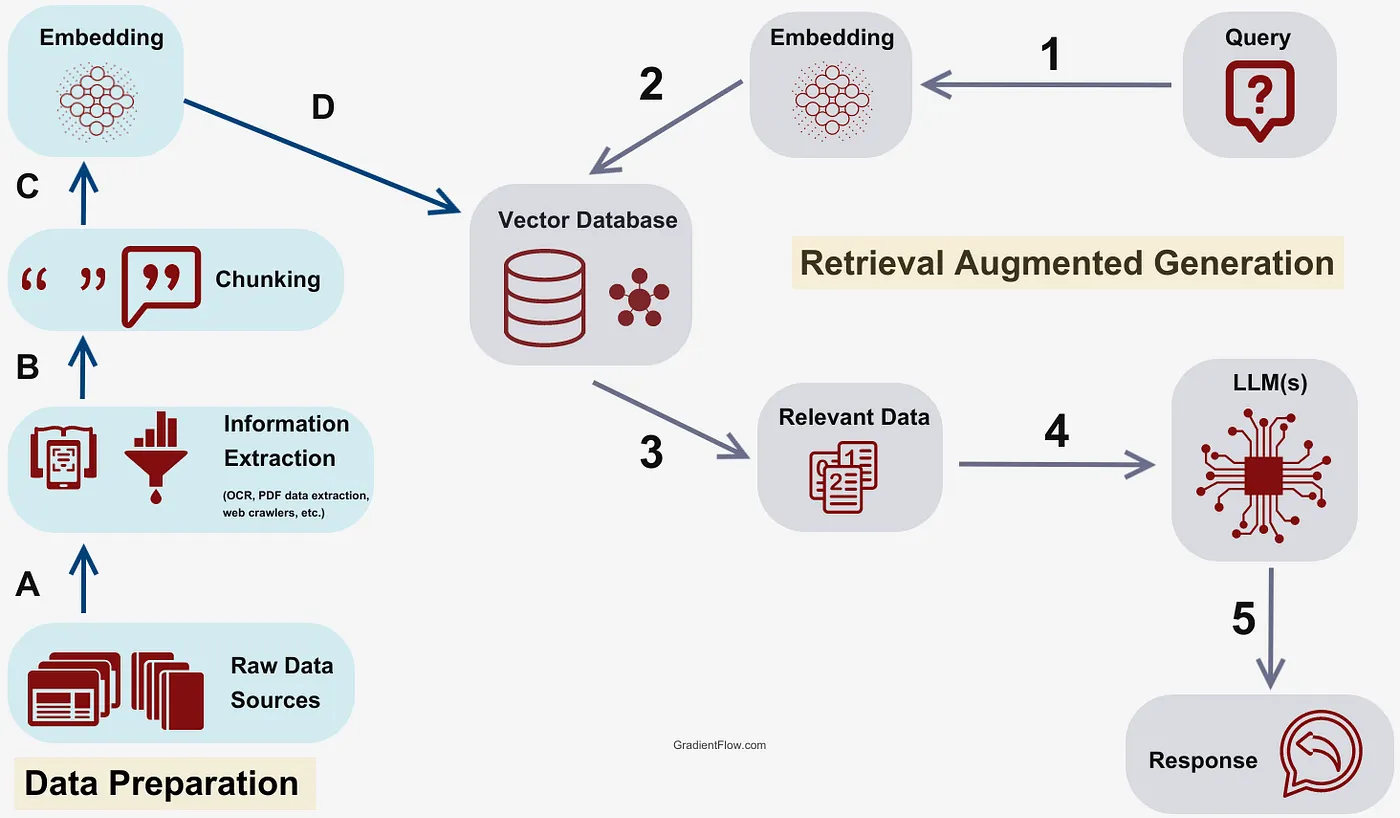
semantic similarity as perceived by humans is translated to proximity in vector space
Embeddings: convert data into numeric vectors that can capture meaning.
vector search: find items with similar embeddings
Documents → Embedding Model → Vectors → Vector Database
                                      ↓
User Query → Embedding Model → Vector Search → Results
Basics of RAG
retrieval-augmented generation
letting models look things up before they reply
combines text generation with real-time information retrieval
instead of relying solely on training data, RIG actively fetches information from trusted sources
Transformer Models
Type of neural netrworks
Reads input data all at once instead of piece by piece.
Uses the attention mechanism to find which parts of the input matter most
A Transformer model that has been trained on a very large set of text is called a Large Language Model or an LLM.
Model Mechanism
Tokenisation
Raw text is broken into small pieces also called tokens.
a token can be a whole word or a part of a word or even a punctuation mark
list of all possible tokens is the model’s vocabulary
Context Window
the amount of text in tokens that the model can remember at one time
it works like a sliding window
compute requirements: they scale quadratically with the length of a sequence.
increasing context length can slow down outputs, as it computes the relationships between the next token and every single preceding token in the sequence
Generation Controls
Temperature
changes how random or predictable the output is
value usually goes from zero to one
low temperature
Picks the most likely next word almost every time.
Steady but boring.
High temperature.
explores less likely word choices
Creative but mistake-prone
A high temperature makes outputs less determined by training data.
Top-p
Model lists many words and sorts them by probability
finds the smallest group of top words whose combined chance adds up to p
picks one word at random, weighed by their original chances
Frequency Penalty
controls the repetition of words or phrases
value determines how strongly to avoid repeats
Presence Penalty
discourages the model from repeating ideas or words that have already been introduced
differs from frequency penalty
frequency penalty: focuses on the repetition of words themselves (on the lexical side)
Presence Penalty: Focuses on concepts and ideas
Stopping Criteria
tells the model when to stop writing more text
criteria
token count
Special stop sequences (JSON code blocks prompts with delimiters)
semantic stopping (completes a paragraph, finishes a function, etc )
Function Calling and Tool Use
Sampling based criteria
Max length
maximum number of tokens a language model can generate in one reply
Model Families
Open Weight Models
Weights = trained parameters
open Weight Models: Weights Are Shared With Everyone
Closed-Weight Models
weights are not shared with the public
AI Agents Basics
Streamed vs Unstreamed Responses
streamed response - agent starts sending words as soon as it generates them.
feels fast
user can stop or change the request early
complex
unstreamed response - waits until the whole answer is ready
simpler to implement
easier to cache or log
user has to wait
key technologies enabling streaming
Server Sent Events or SSE
push updates to client in real time over a single HTTP connection
each chunk of data is a separate event
WebSockets
bi-directional communication channel
Asynchronous programming
Processes multiple client requests concurrently
Reasoning vs Standard Models
Standard models depend on patterns learned during training - often guess the next most likely word.
give an answer in one quick move
Reasoning models break a task into clear steps and follow a line of logic
better to solve math problems, plan actions, and spot errors
takes more time and compute power
Fine tuning vs Prompt Engineering
fine tuning
training an existing model further with your own data to adapt to specific tasks
extra data, extra compute power, extra time
Prompt Engineering
crafting better instructions or examples in the prompt itself
faster, cheaper, and safer
Embeddings and Vector Search
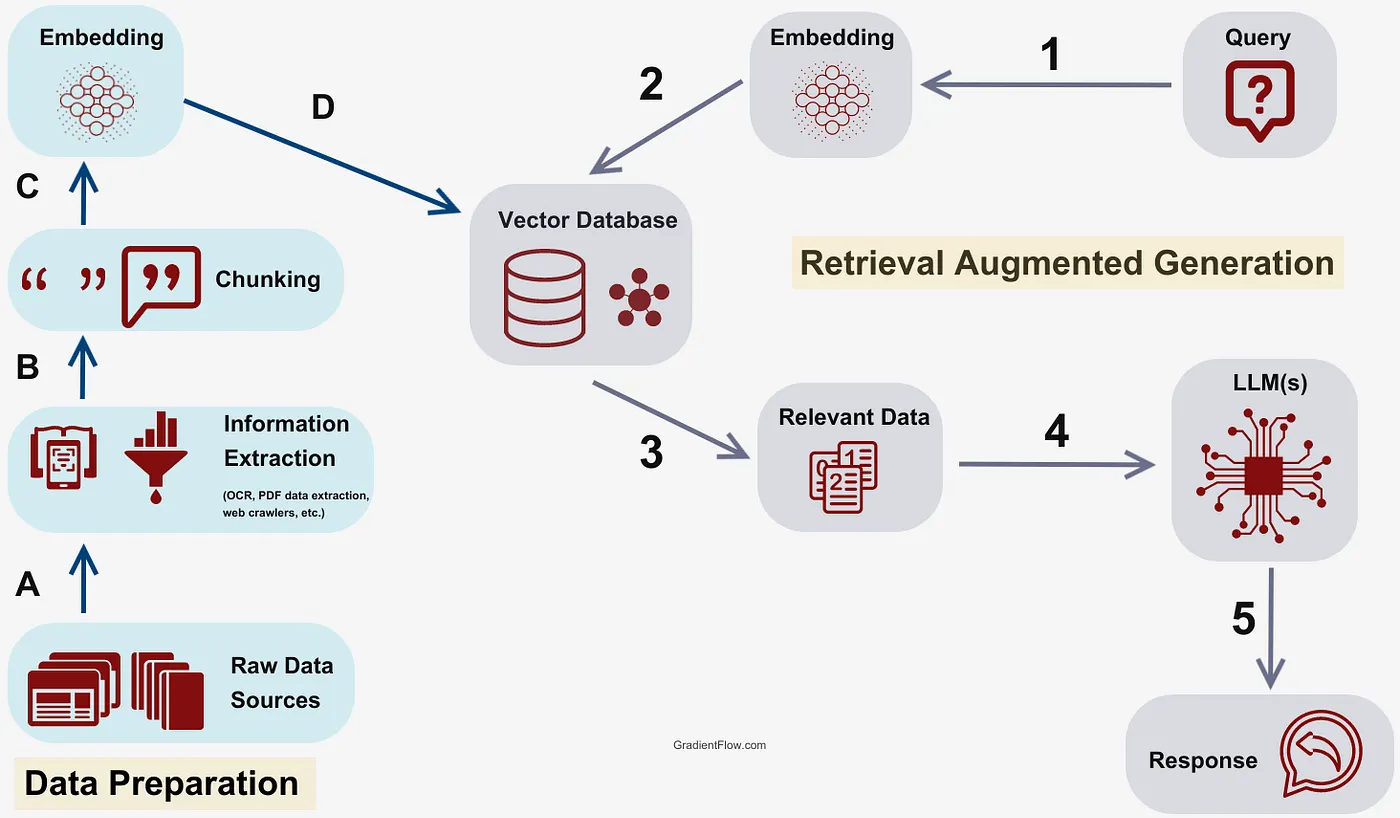
semantic similarity as perceived by humans is translated to proximity in vector space
Embeddings: convert data into numeric vectors that can capture meaning.
vector search: find items with similar embeddings
Documents → Embedding Model → Vectors → Vector Database
                                      ↓
User Query → Embedding Model → Vector Search → Results
Basics of RAG
retrieval-augmented generation
letting models look things up before they reply
combines text generation with real-time information retrieval
instead of relying solely on training data, RIG actively fetches information from trusted sources
AI Agents
software that can
sense its surroundings
think about what it senses
act to reach a goal
act independently
goal set by human
Key characteristics
reasoning: can analyze data and context to determine the best approach for achieving a goal
acting: can use tools, APIs, and other resources
iterating: Improve the output by learning from feedback or results
Tools
extra skills or resources that can be called by AI agents
example : API calculator, database translation engine, etc
Example Use Cases
Personal Assistant
Daily Tasks:
Check Calendar
Set Reminders
Send Alerts
read emails, highlight key points, draft replies
code generation
data analysis
web scraping
gaming/NPC
Agent Loop
cycle that keeps AI agent working towards a goal
first, it gathers data from tools, sensors, or memory
Next, it updates its internal state and decides what to do. ( perhaps using a reasoning step)
carries out the chosen action
checks the result and stores the information
Thought Action Observation Cycle
thought: The LLM decides what the next step should be
Action: takes an action by calling the tools with the associated arguments
observation: Model reflects on the response of the tool
Perception / user input
turn data into usable form
cleaning, translating, and resizing, etc
Reason and Plan
thinking before acting
breaking Goal Into Smaller Steps
Action / tool invocation
Observation and Reflection
AI Agents
software that can
sense its surroundings
think about what it senses
act to reach a goal
act independently
goal set by human
Key characteristics
reasoning: can analyze data and context to determine the best approach for achieving a goal
acting: can use tools, APIs, and other resources
iterating: Improve the output by learning from feedback or results
Tools
extra skills or resources that can be called by AI agents
example : API calculator, database translation engine, etc
Example Use Cases
Personal Assistant
Daily Tasks:
Check Calendar
Set Reminders
Send Alerts
read emails, highlight key points, draft replies
code generation
data analysis
web scraping
gaming/NPC
Agent Loop
cycle that keeps AI agent working towards a goal
first, it gathers data from tools, sensors, or memory
Next, it updates its internal state and decides what to do. ( perhaps using a reasoning step)
carries out the chosen action
checks the result and stores the information
Thought Action Observation Cycle
thought: The LLM decides what the next step should be
Action: takes an action by calling the tools with the associated arguments
observation: Model reflects on the response of the tool